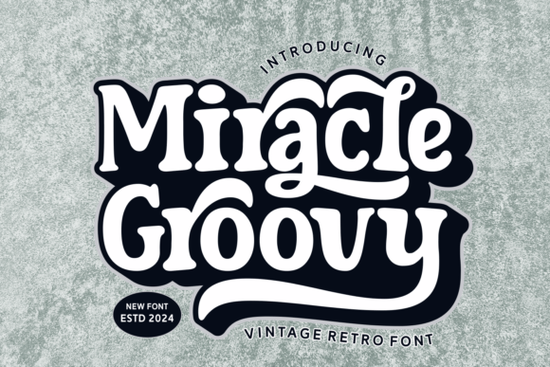
If you need a typeface that captures 1970s warmth without feeling dated, Miracle Groovy Font delivers that balance. This display typeface leans into curved, nostalgic letterforms while keeping the clean lines required for modern printing and digital use. Designers, print-on-demand sellers, and crafters often look for retro styles that still read clearly on t-shirts, mugs, and brand packaging, and this font handles those tasks without extra tweaking.
What makes this 70s-style typeface work for modern projects?
The letterforms borrow from vintage poster art, but the spacing and weight distribution are adjusted for current design software. You get soft, rounded edges that signal nostalgia, paired with consistent baseline alignment that keeps text readable at smaller sizes. The character set includes standard letters, numbers, and punctuation, so you can type full headlines or short product descriptions without missing glyphs. Because it is built as a display font, it performs best for short phrases, logos, or accent text. Pairing it with a simple sans-serif creates a clean hierarchy. If you are building a brand identity that needs vintage charm, you might also explore other display options like a fluid brush style for contrast, or browse the broader retro typeface collection when you need multiple weights.
How does it perform with Cricut and sublimation printing?
Crafters and small shop owners often run into weeding issues when fonts have thin connectors or uneven strokes. This typeface avoids those problems by maintaining steady line thickness. The SVG compatibility means you can upload it directly into Cricut Design Space or Silhouette Studio without manual conversion. When you set up a sublimation print, the solid shapes hold ink well, reducing faded edges on polyester blanks. For best results with heat transfers, follow these steps:
- Convert your text to outlines before exporting to SVG to preserve exact curves.
- Keep letter spacing slightly open so vinyl cutters can track each shape cleanly.
- Test a small print on your specific blank material to check color saturation.
- Avoid scaling the font below 24pt for apparel, as fine retro details can blur during pressing.
Which design projects suit a retro display font best?
This style shines when you want to communicate warmth, creativity, or a handcrafted feel. Print-on-demand sellers use it for boho apparel, cafe branding, sticker packs, and journal covers. Small businesses in the fashion space often choose curved vintage lettering to make packaging feel personal. If your shop targets a younger audience, you might combine this groovy aesthetic with a playful handwritten alternative to keep layouts fresh. For athletic merchandise, swapping to a bold collegiate style gives a completely different mood while keeping the same structure. Startup founders also use display typefaces for announcements. When you need something sharper for a tech brand, a clean geometric option usually pairs better, but for boutique labels and craft fairs, the 70s curve remains reliable.
What should you check before adding a new font to your workflow?
Not every decorative typeface works straight out of the box. Before you commit, verify licensing terms for commercial use, especially if you sell physical products or digital templates. Confirm the file package includes both OTF and TTF formats, since some cutting machines prefer one over the other. Test the font in your actual design software rather than relying on preview images. Kerning and line height can shift between programs, and a quick test file saves hours of reformatting. Keep your library organized by project type, and stick to two or three typefaces per layout to maintain readability.
Quick setup checklist for your next project
- Install the OTF or TTF file and restart your design software to clear cache issues.
- Type your full headline and adjust tracking until the curves breathe evenly.
- Pair with a neutral sans-serif for descriptions and pricing details.
- Export a test SVG and run a small cut or print before scaling up production.
- Save your color palette and font pairing in a brand sheet for future listings.
Start with a single product mockup, test the cut and print quality, and adjust your spacing before listing the item. A careful first run keeps material waste low and your production schedule on track.
Explore Design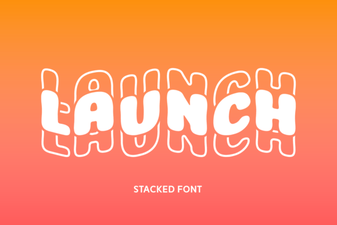 Introducing Launch Font: Design for Modern Websites
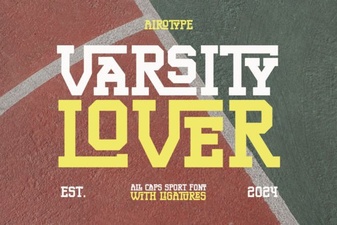 Varsity Lover Font for Sports & Creative Designs
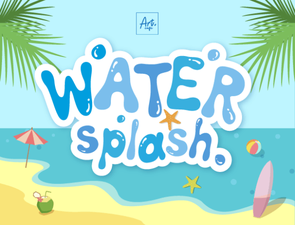 Water Splash Fonts: Inspire Your Creative Projects
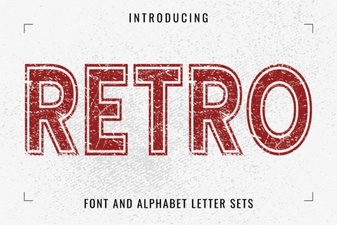 Retro Font Styles for Creative Digital Projects
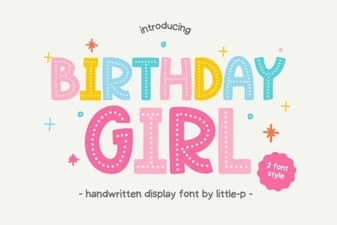 Best Birthday Girl Fonts for Creative Projects
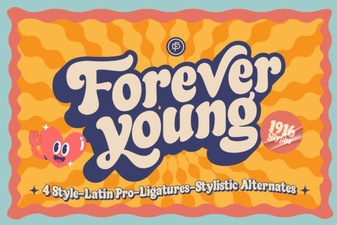 Forever Young Font: Vintage Typography for Modern Projects